
Qodo
AI-powered code integrity platform for generation, testing, and review workflows.
Qodo - Github Copilot alternative
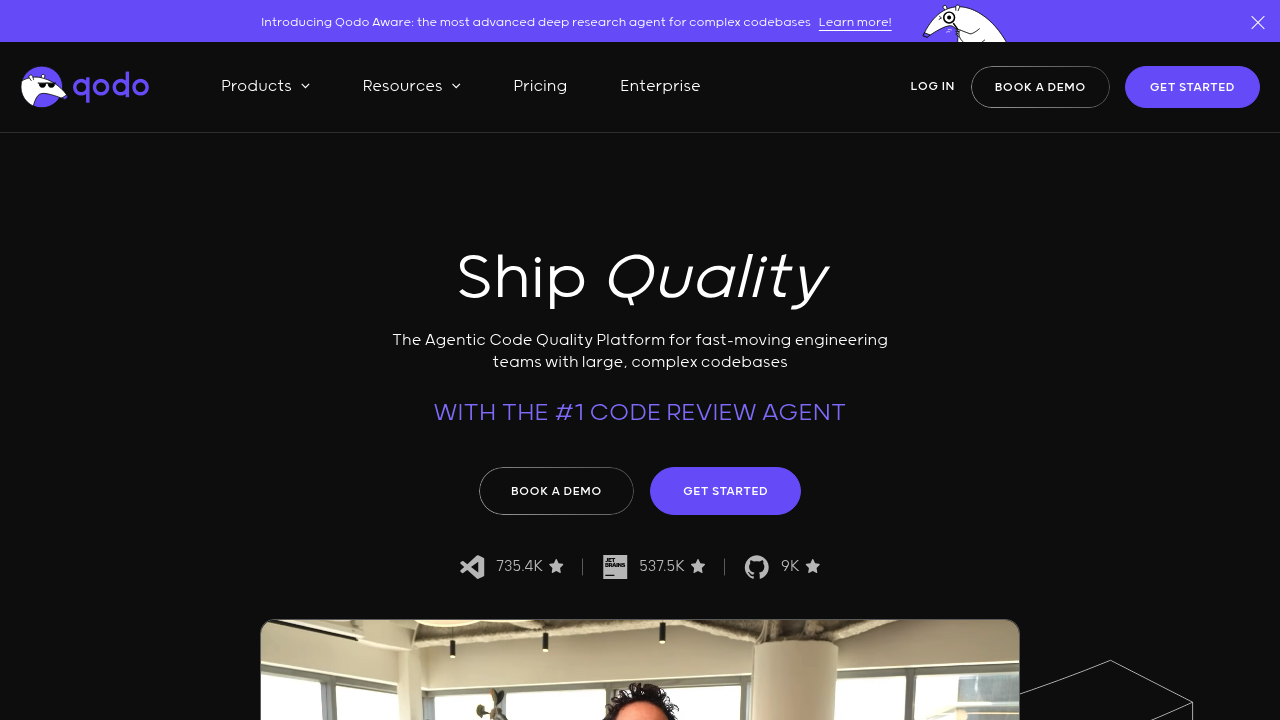
Qodo is an agentic code integrity platform for reviewing, testing, and writing code. It integrates AI across development workflows to strengthen code quality at every stage. Developers can generate code, write unit tests, and create documentation directly within their IDE. Solo developers benefit from comprehensive free access with full-featured AI agents for code quality.
Strengths
- Automates code reviews with compliance checks and generates unit tests with structure.
- Focuses on code integrity by finding edge cases and suspicious behaviors in tests.
- Free for individual developers with support for practically every programming language.
- Supports multiple leading AI models including GPT-4.1, Claude 4 Sonnet, and Gemini 2.5 Pro.
- Offers enterprise-level deployment options including on-prem, VPC, and air-gapped installations.
- Analyzes only necessary code, encrypts data with SSL, and is SOC2 certified.
Weaknesses
- Uses credit-based system that may run out before monthly reset with no mid-cycle purchase option currently.
- Free tier data is used to enhance models unless users manually opt-out.
- Premium AI models (Claude Opus, Grok 4) consume 4-5 credits per request versus 1 for standard models.
- Teams plan limited to 75 PRs per month for Qodo Merge open source edition.
Best for
Developers prioritizing test-driven development and code quality who need automated PR reviews and test generation.
Pricing plans
- Developer — $0/month — 250 credits per month, full repo indexing, quality test generation, community support
- Teams — $30/user per month — 2,500 credits per month, automated PR descriptions, bug detection, no data retention, standard support
- Enterprise — $45/user per month (annual only) — Full platform access, multi-repo awareness, enterprise SSO, priority support, on-prem deployments
Tech details
- Type: AI coding agent platform with IDE plugins
- IDEs: Visual Studio Code and JetBrains IDEs (IntelliJ IDEA, PyCharm, WebStorm, etc.)
- Key features: Agentic mode for complex tasks, full repo indexing, automated PR reviews, unit test generation, code documentation, autocomplete, custom MCP extensions
- Privacy / hosting: SOC2 Type II certified, SSL encryption, secrets obfuscation. Paid tier data stored 48 hours for troubleshooting only, not used for training. Enterprise supports on-prem and air-gapped deployments.
- Models / context window: GPT-4.1, GPT-4o, o4-mini, o3, Claude 4 Sonnet, Claude 4 Opus, Gemini 2.5 Pro, Grok 4, plus proprietary Qodo models (self-hosted). Context window size: Unknown.
When to choose this over Github Copilot
- You focus on test-driven development and prioritize code quality with pre-pull request reviews.
- You need enterprise deployment options like on-prem, VPC, or air-gapped environments for compliance.
- You want more comprehensive edge case test generation to make code more robust.
When Github Copilot may be a better fit
- You primarily need fast autocomplete and inline code suggestions during active coding sessions.
- You prefer a simpler pricing model without credit limits or monthly reset cycles.
- Your workflow doesn't require automated PR reviews or dedicated test generation features.
Conclusion
Qodo excels for teams that focus on test-driven development and code quality analysis. The platform provides comprehensive AI agents for generation, testing, and review as a Github Copilot alternative. Individual developers get full-featured access at no cost. Enterprise options include multi-tenant SaaS and on-premise deployments with proprietary models.
Sources
- Official site: https://www.qodo.ai/
- Docs: https://docs.qodo.ai/
- Pricing: https://www.qodo.ai/pricing/
FAQ
What makes Qodo different from Github Copilot?
Qodo goes beyond autocomplete to automate code reviews, generate structured unit tests, provide compliance checks, and offer enterprise deployment options. It focuses on code integrity by finding edge cases and suspicious behaviors rather than just suggesting completions.
How does the credit system work in Qodo?
Each network request to LLM models costs credits, typically 1 credit per request. Premium models cost more: Claude Opus uses 5 credits per request and Grok 4 uses 4 credits. Credits reset every 30 days from your first message, not on a calendar schedule.
Is Qodo really free for individual developers?
Yes, Qodo offers a free plan for individual developers with access to AI code reviews, testing, and generation. The Developer tier includes 250 credits per month, full repo indexing, and quality test generation.
What IDEs does Qodo support?
Qodo Gen works with Visual Studio Code and all JetBrains IDEs including IntelliJ IDEA, PyCharm, and WebStorm. Installation requires downloading the plugin from the respective marketplace and restarting your IDE.
How does Qodo handle data privacy?
Qodo is SOC2 certified, encrypts data with SSL, and analyzes only necessary code. Paid subscriber data is stored for 48 hours for troubleshooting only and is not used to train AI models. Free tier users can opt-out of data usage via account settings.
Can Qodo be deployed on-premises?
Yes, enterprise customers can deploy Qodo on-premises, in VPCs, or in air-gapped environments. The Enterprise plan supports single and multi-tenant SaaS options as well as proprietary self-hosted Qodo models.